Chefman Pizza Oven Review: Worth It? (October 2026)
The Chefman pizza oven suits indoor cooks who switch between pizza styles and want preset starting points plus manual control. Choose it for smaller homemade pies and frozen pizza; choose a larger indoor oven if sharing one big pizza matters more.
On this page (8 sections)
- What does the Chefman pizza oven offer?
- Will the Chefman fit your kitchen and pizza routine?
- How should you use the presets and manual mode?
- Chefman vs Big Horn, Ninja and Piezano: which suits you?
- How do you set up the Chefman for a first cook?
- Which mistakes cause sticky launches and uneven pizza?
- How should you clean and care for the oven?
- Should you choose the Chefman pizza oven?
The Chefman pizza oven is a good fit for indoor cooks who alternate between homemade pizza styles and frozen pies. Its preset controls offer starting points, while manual mode gives you room to adjust recipes.
Choose it if smaller pizzas fit your household and you have a permanent or easy-to-reach counter spot. Skip it if your main goal is one large sharing pizza or an oven for backyard meals.
What does the Chefman pizza oven offer?
The Chefman combines pizza presets, manual control and high electric heat in an indoor countertop oven. Its main appeal is the range of pizza styles you can approach without managing a flame.
Chefman indoor pizza oven

- Fits 12-inch pizzas
- 300–800°F temperature range
- 5 pizza presets plus manual mode
- Pizza stone and peel included
Choose Chefman if you alternate between homemade pizza styles and frozen pies. Its presets provide starting points, while manual mode lets you adjust your approach as you learn your dough.
Pros
- Presets cover several pizza styles
- Manual mode allows recipe adjustments
- Stone and peel included
- Double-paned viewing window
Cons
- Larger sharing pizzas won't fit
- Needs dedicated counter space and clearance
Its 5 touchscreen presets cover Neapolitan, New York, thin-crust, pan and frozen pizza. Both heating elements adjust from 300–800°F, and the oven fits pizzas up to 12 inches.
A pizza stone, peel and digital cookbook come with it. The double-paned window lets you watch browning without repeatedly opening the door.
These features earn Chefman its place for cooks who want several routes into pizza making. They don't remove the need to learn dough handling, preheating and topping balance.
Who should buy the Chefman pizza oven?
Buy it if your pizza habits vary: a frozen pie on a busy evening, thin crust another night and homemade pan pizza on the weekend. The preset choices suit that mix better than a cooking routine built around one fixed setting.
It's also a sensible choice if you want to learn gradually. Start with one dough recipe and a matching preset, then use manual mode once you know what you'd like to change.
Skip it if you rarely make pizza or already like the results from your regular oven. Our comparison of a pizza oven vs a regular oven helps decide whether another appliance earns its counter space.
Will the Chefman fit your kitchen and pizza routine?
The Chefman needs usable cooking space, not just a storage gap. Measure the counter, required clearance and working area before deciding where it will live.
The oven measures 18.7 in deep, 17 in wide and 10.94 in high, and weighs 23.3 lb. Those measurements describe the appliance itself, so allow the extra space required by its user guide.
Account for the dropdown door and the room needed to move a loaded peel. A counter that holds the oven but leaves nowhere to launch dough will make every pizza harder to handle.
Storage matters too. A low, accessible shelf is more practical than a high cabinet if you'll move the oven often, and you must let it cool before putting it away.
Plan servings around batches
A smaller pizza format works well when people want different toppings. It works less well when everyone expects a full meal to arrive at the same moment.
For a group, plan to slice and share each pizza as it comes out. Prepare toppings ahead, but stretch and dress dough close to launch time so it doesn't sit and stick.
Chefman says its heat-retaining design supports back-to-back cooking. Still, allow the stone to recover between pies as directed, especially if later crusts begin coming out paler underneath.
How should you use the presets and manual mode?
Use the preset that matches the pizza, then adjust one thing at a time if the result needs work. A preset is a starting point for a style, not a substitute for matching heat to dough thickness.
Thin dough with light toppings can bake quickly at high heat. A thick base or a heavily topped pizza needs enough time for the center to cook before the outside becomes too dark.
For frozen pizza, begin with the oven's frozen-pizza instructions and check the food's cooking directions. Don't carry over a high-heat homemade-dough routine without checking that it's suitable.
Manual mode becomes useful once you can name the problem. If the top browns before the center cooks, reconsider temperature, thickness and topping load rather than simply extending the bake at the same heat.
Let the stone preheat properly
Give the stone the full preheat required by the user guide. Hot air alone doesn't mean the baking surface has enough stored heat to cook the base well.
Avoid opening the door repeatedly during preheating or cooking. Use the window to judge progress, then open the oven when you need to handle the pizza.
Keep a brief note of dough weight, setting and result. Repeating a successful combination is more useful than changing temperature, thickness and toppings all at once.
If you're comparing indoor models, our guide to the best indoor pizza ovens puts this format in context. For a wider range of electric choices, see the best electric pizza ovens.
Chefman vs Big Horn, Ninja and Piezano: which suits you?
Choose Chefman for indoor pizza nights with preset guidance. The alternatives make more sense when your priority shifts to larger pies, outdoor meals or separate heat adjustments.
| Model | Main reason to choose it | Main reason to skip it |
|---|---|---|
| Chefman indoor pizza oven | Several indoor pizza styles with preset starting points | You want larger sharing pizzas |
| Big Horn 14 inch indoor | More room per pizza | Your counter is already tight |
| Ninja Artisan MO201 | Outdoor pizza, bread and side dishes | You need an indoor appliance |
| Piezano XL 14 inch electric | Separate control over top and bottom heat | You want preset guidance or confirmed larger capacity |
Big Horn: choose it for larger sharing pizzas
The Big Horn fits 14-inch pizzas and has a 220–850°F range with 6 programs. Its larger cooking area is the stronger reason to choose it over Chefman, rather than the small difference in maximum temperature.
It measures 20.31 in deep, 18.86 in wide and 10.44 in high in its cooking position. The flip-up design can help with storage, but it doesn't reduce the room needed while baking.
Choose it if one larger pizza better matches how your household eats. Skip it if fitting the oven comfortably means losing the preparation space you'll need beside it.
Ninja Artisan MO201: choose it for outdoor meals
The Ninja is an outdoor electric oven with pizza, bake, broil, proof and warm functions. Its temperature range runs from 90–700°F, and it includes a pizza stone and baking pan.
Choose it if pizza is one part of a wider backyard cooking routine. Bread proofing, baking and warming give you reasons to use it beyond pizza night.
Skip it for an indoor kitchen setup. Electric power doesn't make an outdoor appliance suitable for indoor use, and its broader functions don't solve a need for a countertop pizza maker inside.
Piezano XL: choose it for separate heat adjustments
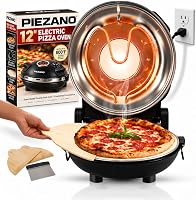
The Piezano has separate upper and lower heat controls, a removable ceramic stone and a maximum temperature of 800°F. It suits cooks who want to adjust how much heat reaches the toppings and base.
Choose it if you enjoy making those adjustments yourself. Skip it if you prefer named style presets or need a confirmed larger cooking surface.
Piezano's size descriptions conflict between 12 and 14 inches, so confirm usable size before ordering it for large pies. Our Piezano vs Chefman indoor pizza oven comparison looks more closely at the control choices.
For the wider trade-offs of this category, read are indoor pizza ovens any good?.
How do you set up the Chefman for a first cook?
Set up the work area and power connection before preparing dough. A clear path from preparation surface to oven makes launching easier and keeps hot equipment away from clutter.
Chefman specifies 1700 watts at 120 volts. Follow the user guide's outlet and cord requirements, and avoid loading the same circuit with other high-draw appliances while cooking.
Use this first-cook sequence:
- Remove packaging and prepare the stone and accessories as directed.
- Place the oven on a stable, heat-safe surface with the required clearances.
- Set out the peel, heat protection and a separate cutting surface.
- Choose a simple recipe with a modest topping load.
- Complete the required preheat before stretching and dressing the pizza.
- Check that the pizza moves freely on the peel before opening the door.
Make the first pizza smaller than the maximum size. That leaves room for handling errors while you learn how the dough slides and where to place it.
If you're still choosing the right format, our guide to how to choose a pizza oven explains fuel, size and heat. It helps separate a need for high-heat pizza cooking from a need for a broader baking appliance.
Which mistakes cause sticky launches and uneven pizza?
The most useful fixes are less waiting on the peel, lighter toppings and proper preheating. Start with those before blaming the heat setting.
Building the pizza too early
Dough can stick when it sits on the peel while you chop toppings or wait for the oven. Have ingredients ready and dress the pizza shortly before launch.
Use enough flour or another recipe-approved dusting to help it move, then give the peel a gentle shake. If the dough sticks, loosen it before approaching the hot oven.
Adding too much sauce or wet toppings
A heavy layer of sauce and wet vegetables can leave the center damp while the edges brown. Drain wet ingredients and use a lighter topping load, especially on thin dough.
Don't solve every pale center by extending the bake. A thinner base or fewer toppings may address the cause without burning the rim.
Using maximum heat for every style
High heat suits some doughs better than others. Sugary dough, thick crust and heavily topped pizza can brown outside before the middle is ready.
Choose a setting for the recipe, then check both the top and underside. Let the finished pizza rest briefly on a suitable surface before slicing so the toppings settle.
How should you clean and care for the oven?
Let the oven and stone cool fully before cleaning or storage. Follow Chefman's instructions for each part rather than treating the stone like a washable baking tray.
Keep water away from electrical parts and avoid spraying cleaner into vents or onto heating elements. Clean the touchscreen and exterior only with the method allowed in the user guide.
For the stone, use the approved dry-cleaning method to remove loose flour and food. Don't soak it or use detergent unless Chefman specifically permits that approach.
Stone discoloration can occur with use, so focus on removing residue rather than making the surface look new. Never cool a hot stone with water, since a sudden temperature change can crack it.
Remove food scraps between sessions to limit smoke from burnt flour and toppings. Keep the door area clear so it closes properly.
For a broader view of placement and appliance type, pizza ovens for home compares gas, wood and electric formats. The guide to using a pizza oven indoors explains why the intended cooking location matters.
Should you choose the Chefman pizza oven?
Choose the Chefman pizza oven if preset guidance and indoor convenience match how you cook. It makes the most sense when you'll use several pizza styles and can leave enough counter space for both the oven and dough preparation.
Pick Big Horn if larger sharing pizzas are the deciding factor. Choose Piezano if separate heat adjustments matter more, after confirming its usable cooking size.
Choose Ninja for an outdoor cooking routine that includes bread and side dishes. Keep your regular oven if pizza is occasional and another appliance would spend most of its time in storage.
Before ordering, settle 3 questions: where the oven will cook, where it will cool and how you'll serve several people. Then compare indoor pizza ovens and electric pizza ovens to narrow the choice around your actual routine.
Frequently asked questions
How big a pizza does the Chefman indoor pizza oven fit?
The Chefman indoor pizza oven fits pizzas up to 12 inches. Choose it for individual pies or smaller pizzas to share, and plan several batches for a group; leave room to launch and remove the dough rather than stretching every pizza to the oven's full capacity.
What temperature can the Chefman pizza oven reach?
The Chefman pizza oven reaches 800°F, and both heating elements have a 300–800°F adjustment range. Use a setting suited to your dough and pizza style rather than choosing maximum heat for every recipe; thick bases and heavy toppings need a different approach from thin, lightly topped pizza.
Does the Chefman pizza oven include a stone and peel?
Yes, the Chefman pizza oven includes a pizza stone, a peel and a digital cookbook. The stone supplies the baking surface, while the peel moves pizza into and out of the oven; you'll still need a clear preparation area, suitable heat protection and a place to cut finished pizzas.
Is the Chefman pizza oven for indoor use?
Yes, the Chefman is an indoor countertop pizza oven. Set it on a stable, heat-safe surface with the clearances required in its user guide, and leave room for the door and peel; its electric power source doesn't remove the need to plan for hot surfaces and safe handling.