Are Indoor Pizza Ovens Any Good?
Yes, indoor pizza ovens are good for frequent pizza nights and a crisp, stone-baked base. Choose one if you have room for safe setup and want more control over your pizza than your regular oven provides.
On this page (8 sections)
- Why are indoor pizza ovens good for homemade pizza?
- What are the drawbacks of an indoor pizza oven?
- Which indoor pizza oven suits your cooking style?
- How much kitchen space and electrical capacity do you need?
- Are indoor pizza ovens good for beginners?
- How do you get a crisp base without burning the toppings?
- How should you clean and care for an indoor pizza oven?
- Are indoor pizza ovens good for your household?
Yes, indoor pizza ovens are good for frequent pizza nights, especially if you want a crisp base and control over top browning. They make the most sense when pizza is a regular meal and you have space for a dedicated hot appliance.
The main trade-off is convenience versus room: you avoid outdoor fuel, but still need preheating, dough preparation, and cleanup. Buy for the crust and cooking routine you want, rather than a short bake-time claim alone.
Why are indoor pizza ovens good for homemade pizza?
Indoor pizza ovens combine a hot baking stone with heat above the pizza, helping the base cook while the toppings brown. Their small cooking space focuses the appliance on a single pie.
High heat suits thin pizzas because the dough can cook quickly without a long drying period. Thick dough and heavy toppings need a different balance, so the highest setting isn't always the right one.
The Piezano models reach 800°F and provide separate upper and lower heat controls. Those controls help you change the balance when the cheese browns before the base is ready, or the bottom darkens too soon.
Electric heat also removes fuel handling from pizza night. You won't need to light wood or connect a propane tank, though these ovens still need careful placement and supervision.
What are the drawbacks of an indoor pizza oven?
The biggest drawbacks are space, small batches, and cleanup after each session. A short bake doesn't remove the work of stretching dough, preparing toppings, and letting the oven cool before storage.
Cooking one pizza at a time can also mean people eat in turns. For a group, serving slices as each pie finishes works better than promising everyone a whole pizza at once.
A dedicated oven is less useful if you mainly want large trays of food or deep casseroles. Keep your regular oven's strengths in mind before adding another appliance.
For occasional pizza, first try improving your dough, preheating, and topping amounts. Our pizza oven vs. regular oven comparison helps you decide whether a separate oven solves a real problem.
Which indoor pizza oven suits your cooking style?
Choose manual controls for direct adjustments and presets if you want a starting point for different crust styles. Then narrow the options by usable pizza size and available counter space.
Piezano XL: for cooks who want direct heat control
The Piezano XL suits someone who wants to adjust the base and top separately without choosing a preset program. Its removable ceramic stone also lets you take the baking surface out for care once everything has cooled.
Confirm the usable stone diameter before ordering: the XL is described as a 14-inch model, but its description also refers to a 12-inch stone. Skip it if a confirmed larger cooking surface is your main reason for buying.
Chefman: for preset guidance and repeat batches
Chefman suits cooks who want named pizza settings and back-to-back cooking. It has 5 touchscreen presets for Neapolitan, New York, Thin-Crust, Pan, and Frozen pizza, plus a Manual setting.
Chefman describes its double-paned window and heat retention as features for making several pizzas in succession. Its 23.3-pound weight makes it a better choice for a regular counter position than frequent carrying between rooms.
Skip it if your priority is larger pies or easy lifting into a high cupboard. The Chefman pizza oven review covers its controls and kitchen fit in more detail.
Piezano 12 inch: for smaller pies and knob controls
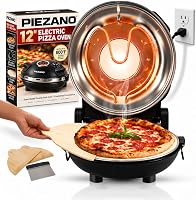
The Piezano 12 inch suits cooks who prefer simple knobs and smaller pizzas. It includes a removable ceramic stone, 2 wooden peels, and a dough scraper.
PIEZANO claims a fresh pizza can bake in under 6 minutes, but that excludes preparation and preheating. Choose it for direct control over the bake, and skip it if you want named programs to guide your settings.
For a closer choice between knobs and touchscreen programs, read Piezano vs. Chefman indoor pizza ovens.
Big Horn: for larger pies and several crust styles
Big Horn suits households that want 14-inch pizzas and preset starting points. Its temperature range runs from 220–850°F, with programs for Manual, Wood Fired, Frozen, New York, Thin Crispy, and Deep Dish.
Wood Fired is a program name; this oven uses electricity and doesn't burn wood. Big Horn states a 15-minute preheat and claims a 3-minute pizza bake, so allow time before the first pie.
Its flip-up design helps with storage, but check the operating footprint of 20.31 inches deep by 18.86 inches wide. Skip it if that working space, plus the required clearances, would crowd your preparation area.
How much kitchen space and electrical capacity do you need?
You need room to operate the oven safely, not just enough counter to hold its feet. Measure door or lid access, overhead clearance, and a nearby area for stretching dough and handling the peel.
Don't assume an oven can run beneath a low cabinet because it fits there while cold. Follow the manual's clearances and choose a stable surface suitable for the appliance.
The Piezano models use 1200W, Chefman uses 1700W, and Big Horn uses 1800W. Check the required voltage and outlet instructions, and avoid running other high-draw appliances on the same circuit.
Keep the cord away from hot surfaces and water, and follow the manual's rules about extension cords. Our guide to using a pizza oven indoors explains the setup questions to settle before buying.
Are indoor pizza ovens good for beginners?
Indoor pizza ovens can be good for beginners who start with a simple pizza and repeatable settings. Presets help you begin, while manual controls let you respond to how the top and bottom cook.
Use a dough recipe intended for your oven's temperature range. Dough with substantial sugar or oil can brown quickly at high heat, so don't assume every recipe suits the maximum setting.
Begin with a modest layer of sauce and a few toppings. Once you can launch and bake that pizza reliably, change one thing at a time, such as dough thickness or upper heat.
How do you get a crisp base without burning the toppings?
Give the stone the full preheat your manual requires, then keep toppings light enough for the dough to cook through. A hot air reading doesn't always mean the stone is ready.
Drain wet ingredients and prepare toppings that need longer cooking before adding them. A brief pizza bake may finish the crust before thick pieces of raw meat cook safely.
Stretch and top the pizza shortly before loading it. Leaving it on the peel too long encourages sticking, especially when sauce moisture reaches the dough.
Use only enough flour or other permitted release material to help the pizza slide. Excess loose flour can scorch, creating bitter flavors and smoke.
Watch the pizza closely as it bakes, and turn it only as the oven's instructions allow. If the base stays pale while the cheese darkens, reduce upper heat or increase lower heat where the controls permit.
How should you clean and care for an indoor pizza oven?
Let the oven and stone cool fully before cleaning or moving them. Sudden temperature changes can damage a ceramic stone, so never cool a hot one with water.
Remove loose food with the tools and method allowed by the manual. Don't assume a removable stone can be soaked, cleaned with detergent, or put in a dishwasher.
Wipe the exterior and clean other removable parts as directed. Some stone staining can remain after food residue is gone; chasing a spotless surface can lead to harsh cleaning the material doesn't suit.
Keep toppings from spilling over the edge, and remove burnt debris between sessions once cool. Store the appliance only when it is dry and cold, with the stone protected from knocks.
Are indoor pizza ovens good for your household?
An indoor pizza oven is a good buy if you'll use it often enough to justify its space. Skip one if pizza is rare, your regular oven already gives you the crust you like, or safe setup would be awkward.
Choose Piezano for direct knob control, Chefman for preset guidance and repeat batches, or Big Horn for larger pies. Confirm the XL's usable diameter before choosing it specifically for size.
Use our best indoor pizza ovens guide to compare kitchen fit, or browse best electric pizza ovens for more electric options.
If you're still deciding between indoor convenience and outdoor cooking, start with home pizza ovens: gas, wood, and electric. The Ooni models explained guide helps if that brand is also on your shortlist.
Frequently asked questions
Are indoor pizza ovens worth it?
Indoor pizza ovens can be worth it for frequent pizza makers who want a stone-baked base and more control over browning. Skip a dedicated appliance if you make pizza rarely, need large sheet-pan meals, or lack space for safe setup and storage after the oven cools.
Do indoor pizza ovens make better pizza than a regular oven?
An indoor pizza oven can improve base browning and shorten the bake when its hot stone and heating elements suit your dough. Better results still depend on preheating, topping moisture, and heat settings, so compare those benefits with what your regular oven already does well.
Are countertop pizza ovens safe to use indoors?
Use only a pizza oven designed for indoor use, following its manual for clearance, surface, outlet, and ventilation requirements. Keep flammable items away and treat the exterior as potentially hot; outdoor-only gas, wood, and charcoal ovens must stay outdoors because they create fire and carbon monoxide risks.
What size indoor pizza oven should I get?
Choose the usable pizza diameter first, then measure the appliance footprint, door access, and required clearances. Smaller pies suit individual toppings and lighter meals, while larger pies reduce the number you need to make; neither size guarantees that the oven will fit beneath your cabinets.