Gas or Wood Fired Pizza Oven: Which Should You Buy? (October 2026)
Choose a gas or wood fired pizza oven around your cooking routine: gas suits quick heat adjustments and less cleanup; wood suits cooks who enjoy tending a fire. Choose multi-fuel if you'll use both options, allowing for any separate gas burner.
On this page (10 sections)
- Gas or wood fired pizza oven: which should you buy?
- Which of these ovens fits your cooking routine?
- Does wood-fired pizza taste better than gas pizza?
- How do heat control and baking time differ?
- How much pizza space do you really need?
- What should you check before setting up outdoors?
- How should you run the first pizza night?
- What common mistakes should you avoid?
- What care does each fuel type need?
- Which gas or wood fired pizza oven is right for you?
Choose a gas or wood fired pizza oven by how you want to spend pizza night: gas makes heat adjustments simpler, while wood adds fire tending and ash cleanup. Both can brown dough well, so fuel should fit your routine before it fits an image of the perfect backyard oven.
Gas suits frequent cooks who want fewer tasks between preparing dough and serving dinner. Wood suits people who enjoy building and feeding a fire, with multi-fuel models offering a route between the two.
For a wider view of pizza ovens for home, compare these outdoor choices with electric designs before deciding on fuel.

Gas or wood fired pizza oven: which should you buy?
Buy gas if convenience will help you cook more often; buy wood if managing the fire is part of the appeal. Choose multi-fuel when you have a clear use for both cooking styles.
Think about who will run the oven while everyone else eats. If one person must stretch dough, add toppings and bake every pizza, fewer fire-management tasks can make the evening easier.
Wood is a better fit when you can give the oven steady attention. You need time before the meal to establish the fire and time afterward to deal with cooled fuel and ash.
Is a gas or wood fired pizza oven better for beginners?
Gas gives beginners fewer tasks to learn at once. You can focus on shaping dough, launching cleanly and turning the pizza while adjusting the flame with a control.
Wood is still a reasonable first choice if fire tending interests you. Start with small pizzas and a short menu so you aren't learning dough handling, fuel management and several dishes in one session.
Neither fuel removes the need for practice. A badly stretched base or overloaded pizza can be hard to launch even when the oven temperature is right.
Which of these ovens fits your cooking routine?
The Big Horn suits propane cooking, the Pizzello suits mixed outdoor meals, and the Karu 2 suits buyers who want fuel options. Their cooking layouts matter as much as their fuel choices.
Big Horn: choose it for regular propane pizza nights
The Big Horn 15 inch gas suits cooks who want larger shared pizzas with direct flame adjustments. Its dual side burners have independent knobs, and its built-in thermometer lets you follow chamber temperature.
It accommodates pizzas up to 14.7 inches, but leave yourself handling room while learning. A slightly smaller pie is easier to launch and turn than one stretched to the oven's limit.
The propane regulator hose and pizza peel are included. Plan the cylinder location and hose route before setting the oven on a table, keeping both clear of heat and foot traffic as instructed.
Skip this model if a wood fire is central to the experience you want. It also makes less sense if you cannot provide a suitable outdoor counter and a safe place for the propane supply.
Pizzello: choose it for pizza and other outdoor food
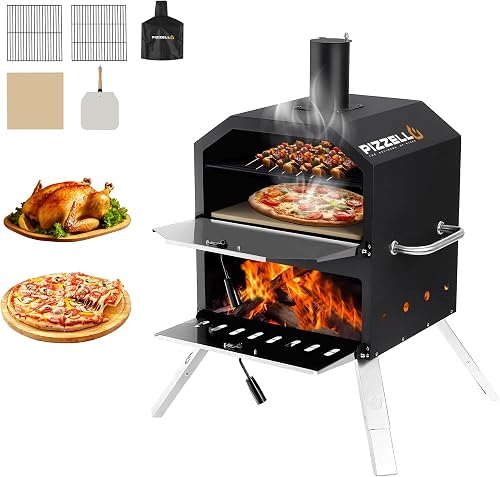
The Pizzello 16 inch wood-fired suits cooks who want to build a meal around solid fuel. Its 2-layer layout provides room for pizza and grilled food, and the center rack comes out for taller dishes.
It accepts wood, pellets or charcoal. Pizzello recommends putting the pizza stone on the lower level because that area runs hotter than the upper level.
That layout gives you options, but it also adds planning. Pizza, vegetables and meat won't necessarily finish together, so use separate timing and check meat with a food thermometer.
The oven includes a stone, peel, 2 grill grates and a cover. Adjustable legs and side handles help with positioning, though you still need to plan storage and move it only when fully cool.
Skip it if you mainly want a quick pizza after work. Its extra cooking space is useful only if you'll use it, and fire tending remains part of every cook.
Ooni Karu 2: choose it to keep both fuel routes open
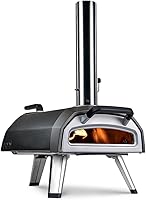
The Ooni Karu 2 suits cooks who want solid fuel without giving up a future propane option. It uses wood or charcoal, while the compatible gas burner is sold separately.
Its 12 inch pizza capacity favors individual pies. That works well for different toppings, but serving a group means planning a sequence of pizzas rather than one large shared pie.
A glass door and integrated thermometer help you watch the oven during use. Neither replaces checking the pizza itself, especially when the rim colors faster than the base.
The oven weighs 15.3 kg, so consider the carrying route as well as storage space. Portability is less useful if every cook involves awkward steps or a narrow doorway.
Skip it if large pizzas are your main goal. If you'll use propane every time, compare the complete gas setup with a dedicated gas oven before paying for flexibility.
Does wood-fired pizza taste better than gas pizza?
Wood can add smoky notes, but it doesn't automatically make better pizza. Dough fermentation, balanced toppings and well-controlled browning have a large effect on the finished slice.
A quick bake gives pizza less time to absorb smoke than a long, slow cook. Choose wood for the whole cooking experience rather than expecting a strong smoke flavor in every bite.
Aim for a clean-burning fire using fuel approved for the oven. Damp wood and restricted airflow can create dirty smoke and soot, which are poor substitutes for flavor.
Gas makes it easier to keep your attention on the recipe. Try improving dough handling and reducing wet toppings before assuming a different fuel will fix a pale or soggy pizza.
How do heat control and baking time differ?
Gas gives you direct burner adjustments, while wood requires changes to fuel and airflow. With either fuel, the stone and the air inside the oven heat at different rates.
A chamber thermometer cannot tell you the exact temperature of the cooking surface. An infrared thermometer can help check the stone, using the oven's recommended cooking range as your guide.
Don't launch as soon as the air reaches your target. The stone needs enough stored heat to cook the base, and it needs time to recover after each pizza.
Why maximum temperature isn't the main buying test
Useful control matters more than the highest temperature claim. Thin pizza and thicker dough need different balances of heat and time, so the hottest setting isn't always the right one.
Big Horn claims a maximum of 1070°F, while Ooni gives the Karu 2 a top temperature of 950°F. Both brands promote very short pizza bakes, but plan around how your dough actually cooks rather than a fixed countdown.
If toppings burn while the base stays pale, allow more stone preheating and review your flame setting. If the bottom scorches first, check surface heat and reduce loose flour on the base.
How much pizza space do you really need?
Choose pizza size around the meal you serve, then check the oven's full footprint. A large stone helps with shared pizzas, while smaller pies make individual topping choices easier.
Maximum capacity isn't the easiest size for a beginner. Leave space around the dough so you can turn it without pushing the edge into a hot wall or flame.
For a group, plan serving order as well as diameter. Slice and share each pizza as it comes out, and let the cooking surface recover before launching the next one.
Avoid promising everyone a whole pizza at the same time from a single cooking surface. A staggered meal works better when toppings are ready and someone can help with serving.
What should you check before setting up outdoors?
Check clearances, support and fuel storage before buying the oven. A patio location needs room for safe operation, not just enough space to hold the oven body.
All 3 models here are outdoor ovens. Keep them out of enclosed spaces, and follow each manual's rules for overhead clearance, nearby walls and combustible materials.
Allow room in front for a peel and your arm movement. Keep the launch area clear of chairs, children, pets and people walking between the kitchen and garden.
Use a stable surface that meets the oven's requirements. Our guide to pizza oven stands and tables explains how working height, storage and handling space affect the setup.
For propane, use the specified regulator and connection, and follow the manual's leak-check procedure. For solid fuel, arrange dry storage away from the hot oven and keep loose fuel out of the working area.
How should you run the first pizza night?
Keep the first cook small, simple and fully prepared before lighting. A few modest pizzas teach you more about heat control than a crowded menu.
- Read the lighting and shutdown steps. Know the correct sequence before connecting gas or loading solid fuel.
- Prepare toppings in advance. Drain wet ingredients and keep topping amounts modest so the center can cook.
- Preheat the stone properly. Follow the oven's guidance rather than judging readiness by the flame alone.
- Check that the dough moves on the peel. Give it a gentle shake before approaching the oven.
- Watch and turn as needed. Uneven browning is a signal to act, not a reason to wait for a timer.
- Pause between pizzas. Let the surface recover and adjust the heat before the next launch.
With wood, use small fuel additions as directed instead of trying to correct falling heat with a large load at the last moment. Keep airflow paths clear and never use treated, painted or glued wood.
With gas, make deliberate adjustments and watch how the pizza responds. Our guide to using an outdoor pizza oven covers the cooking sequence in more detail.
What common mistakes should you avoid?
The biggest mistakes are rushing preheating, overloading dough and buying around an unused feature. Each creates a problem that changing fuel won't solve.
Too many wet toppings: excess sauce, fresh cheese and piled vegetables can leave the middle damp while the rim browns. Start with less and add moisture-heavy ingredients carefully.
Too much launch flour: loose flour can burn on the stone and leave a bitter taste. Use enough to release the dough, then remove excess from the peel.
Assuming pizza turns itself: Big Horn promotes its burner layout for cooking without rotation, but watch the crust and turn it if one side colors faster. Actual browning should guide you.
Buying multi-fuel without a plan: several fuel choices only help if you'll use them. Check the complete setup, storage needs and required accessories before choosing on versatility alone.
Choosing wood for flavor alone: you'll still have to manage the fire every time. Read our guide to wood for a pizza oven before committing to solid-fuel cooking.
What care does each fuel type need?
Gas usually means less ash cleanup, while solid fuel adds cooled ash and leftover fuel to the job. Both types need food debris removed and protection from damp storage.
Let the oven and stone cool fully before cleaning or moving them. Don't pour water onto a hot stone, since a sudden temperature change can crack it.
Use only cleaning tools and methods allowed by the manufacturer. Avoid soaking the stone or using cleaners it can absorb, and keep burner openings or airflow paths clear as instructed.
Treat ash as potentially hot even when the fire looks finished. Follow the manual's disposal method, using a suitable metal container kept away from combustible material.
Cover the oven only after it is cool and dry. A cover helps with storage, but trapped moisture still needs attention, especially if the oven stays outdoors.
Which gas or wood fired pizza oven is right for you?
Choose your gas or wood fired pizza oven for the cooking routine you'll repeat. The best fit is the one whose setup, meal size and cleanup you can manage comfortably.
Pick the Big Horn for regular propane pizza nights and larger shared pies. Pick the Pizzello when tending solid fuel and cooking a broader outdoor meal are both part of the plan.
Choose the Ooni Karu 2 for smaller pizzas and a genuine desire to switch fuel setups. Include the separate burner in your planning if propane is part of that choice.
If propane fits your routine, compare the best gas pizza ovens. If the fire is part of the attraction, use our wood-fired pizza oven guide, or compare layouts across the best outdoor pizza ovens.
Frequently asked questions
Is gas or wood better for a pizza oven?
Gas is better for cooks who want direct heat adjustments and less cleanup; wood suits those who enjoy managing a fire. Both can make well-browned pizza; choose around your cooking routine, then compare pizza capacity, outdoor placement needs and the equipment included with each oven.
Does a wood-fired pizza oven make pizza taste smoky?
Wood can add smoky notes, but a short pizza bake may produce a subtle difference; dough fermentation, toppings and browning also shape flavor. Choose wood because you enjoy solid-fuel cooking, rather than expecting smoke alone to transform the pizza, and avoid letting a dirty, smoldering fire coat food with soot.
Can a multi-fuel pizza oven use gas and wood?
Some multi-fuel ovens support gas and wood through separate setups; the Ooni Karu 2 cooks with wood or charcoal and accepts a gas burner sold separately. Follow its instructions for changing fuels and compatible parts; support for both fuels does not mean you should burn them together.
Is a gas pizza oven easier to control?
Gas makes burner adjustments more direct because you turn a control instead of adding fuel or changing airflow; you still need to watch the crust, manage the flame and allow the stone to recover between pizzas. A chamber thermometer helps monitor heat but does not measure the stone surface.
Which fuel is easier to clean up?
Gas usually creates less cleanup because there is no wood or charcoal ash to remove; both fuel types still leave flour, crumbs and food spills on the cooking surface. Let the oven cool fully and follow its care instructions; solid-fuel ash can hide hot embers long after cooking ends.